
Shopify vs WooCommerce in 2026: which platform is right for your store?
 Patrick Verhoeks
 An honest comparison of Shopify and WooCommerce for entrepreneurs in the Netherlands. Real costs, scalability, and when to choose which platform.
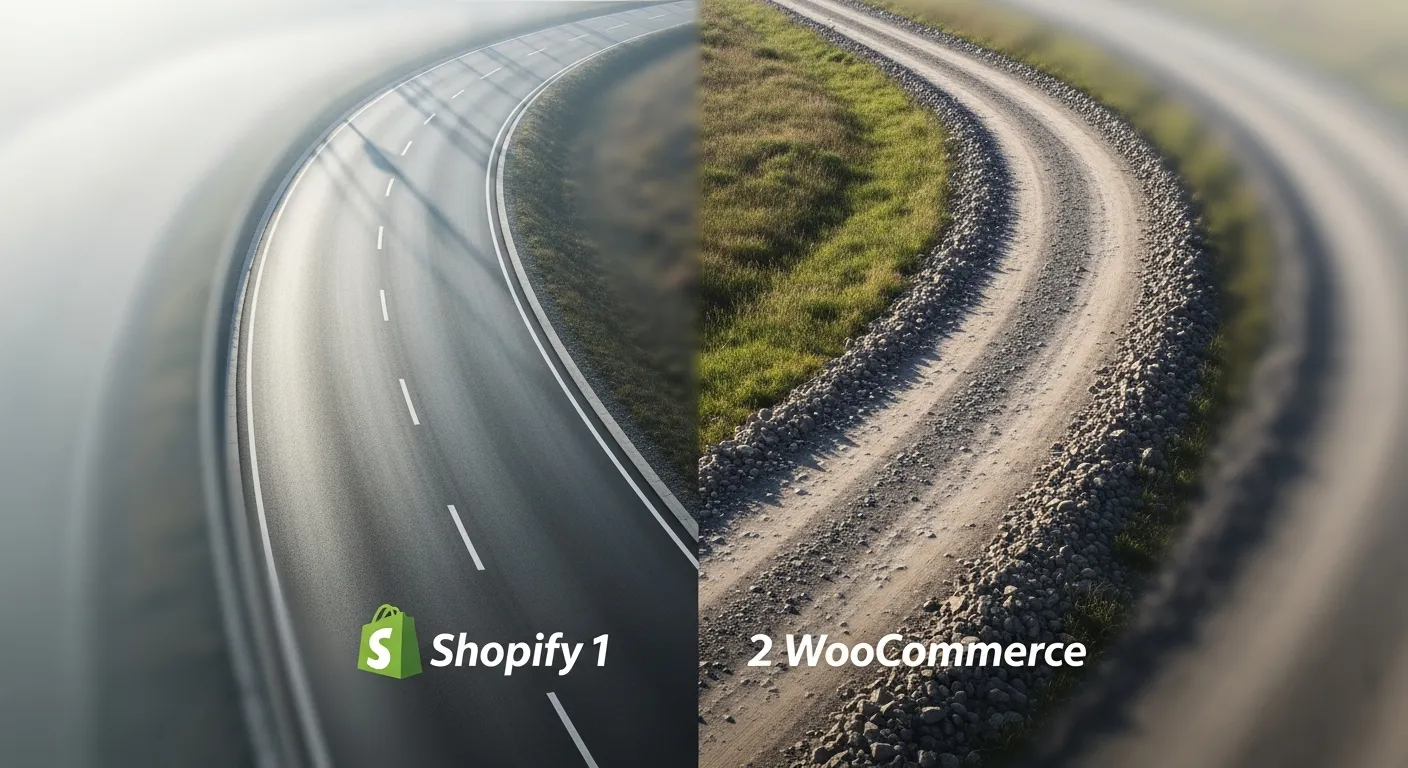
Shopify or WooCommerce — it’s one of the most common questions I get from entrepreneurs considering a new webshop or thinking about switching platforms. Both have large user bases and enthusiastic advocates. But they are fundamentally different products, and the right choice depends heavily on your situation.
In this article I give an honest comparison — no affiliate links, no promotional spin. Just what I see in practice.
What is WooCommerce?
WooCommerce is a plugin for WordPress. That means you first need a WordPress installation (self-hosted), and WooCommerce adds the webshop functionality on top of it. The software itself is free, but everything around it costs money: hosting, plugins, SSL certificate, security, updates and maintenance.
The appeal of WooCommerce: the software is open source, enormously flexible, and you maintain full control over your code and data. For developers and technical entrepreneurs it’s a powerful platform.
The reality for most entrepreneurs: you spend a lot of time managing your platform instead of running your business. Updates break things, plugin conflicts arise, security vulnerabilities need patching.
What is Shopify?
Shopify is a managed SaaS platform. You pay a monthly subscription and Shopify handles hosting, security, updates and infrastructure. You get a storefront, payment processing, inventory management and a large app ecosystem.
The appeal of Shopify: it just works. You focus on your products and marketing; Shopify handles the technical side.
The reality: you’re more dependent on the platform and its ecosystem. Customisations outside the standard are more complex or require a developer.
The real costs of WooCommerce
WooCommerce is often presented as the “cheap” option because the software itself is free. But add up the actual costs:
- Hosting: €20–80/month for reliable e-commerce hosting
- SSL certificate: €0–100/year (often included with hosting)
- Premium plugins: €200–600/year for essential functionality (SEO, payments, shipping)
- Theme: €50–200 one-off
- Developer for issues: €80–150/hour
Add it up and you quickly land at €500–1,500/year in base costs — before any development work. And that doesn’t count the time you spend on maintenance.
The real costs of Shopify
Shopify’s pricing is transparent:
- Basic: $29/month — suitable for most starting stores
- Shopify: $79/month — for growing stores with more staff accounts
- Advanced: $299/month — for high-volume stores with advanced reporting
- Shopify Payments: 0% transaction fees (with Shopify Payments); 0.5–2% with external payment providers
For Dutch stores: Shopify Payments with iDEAL is available and works well. The monthly costs are predictable and include hosting, security and updates.
When to choose WooCommerce
WooCommerce is the better choice if:
- You already have an existing WordPress site with a large amount of content
- You need very specific custom functionality that Shopify’s ecosystem doesn’t offer
- You have in-house technical expertise to manage the platform
- Open source and full data ownership are non-negotiable requirements
When to choose Shopify
Shopify is the better choice if:
- You want to focus on your business rather than your platform
- You’re looking for predictable costs and less technical maintenance
- You expect to scale and want a platform that grows with you
- You want fast time-to-market
Migrating from WooCommerce to Shopify
A lot of our work involves migrating from WooCommerce to Shopify. The main motivations: faster performance, lower total cost of ownership, and less time lost to technical maintenance.
In most cases, the migration pays for itself within 6–12 months through the saved maintenance costs and developer hours.
Conclusion
WooCommerce and Shopify are both good platforms — for different users. WooCommerce gives you maximum flexibility and control but requires more technical investment. Shopify gives you speed, reliability and scalability with lower maintenance burden.
For most Dutch entrepreneurs starting or scaling an e-commerce business, Shopify is the better choice in 2026. But the right answer depends on your situation.
Want to talk through what makes sense for your store? Schedule a free call — no strings attached.
- #shopify
- #woocommerce
- #comparison
- #e-commerce
- #platform