
Marketplace optimisation: how to sell more via Amazon & Bol.com
 Patrick Verhoeks
 How G&F Verpakkingen went live on Amazon NL, BE, DE and FR in 6 weeks via Channable. Everything about marketplace optimisation, feed management and the opportunities of Amazon and Bol.com for Dutch webshops.
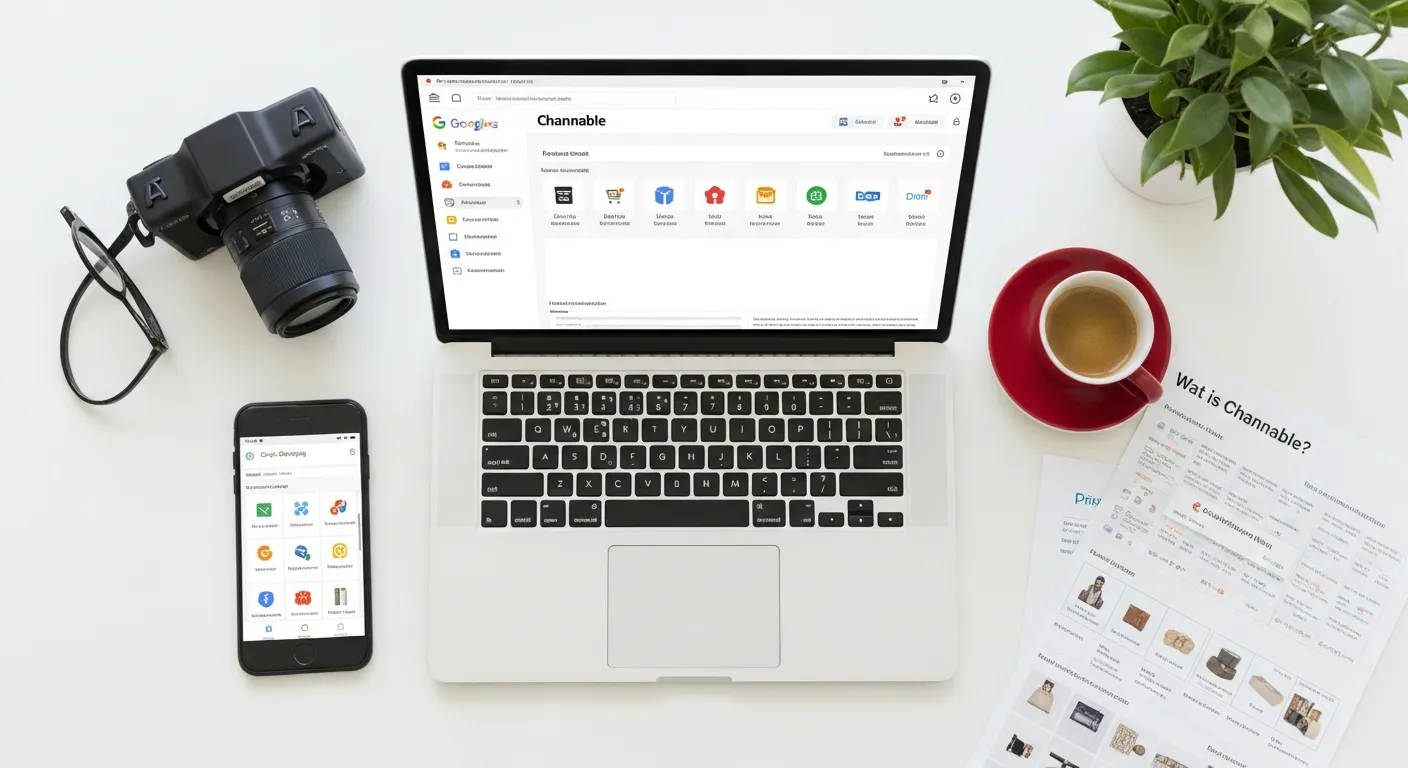
If you want to grow seriously with your e-commerce, you can no longer ignore marketplaces. Bol.com has more than 13 million active customers. Amazon gives access to over 300 million buyers across Europe. Yet many Dutch webshops leave these opportunities on the table — because the technical setup seems too complex, or because it’s unclear where to start.
In this article I explain how marketplace optimisation works, what the most important levers are on Amazon and Bol.com, and how we got G&F Verpakkingen live on four European Amazon markets in 6 weeks via Channable.
What is marketplace optimisation?
Marketplace optimisation is structurally improving your presence on external sales platforms. It goes far beyond simply uploading your products. Each platform has its own search algorithm, its own requirements for product data, and its own advertising system. Those who get this right rank higher in search results, have a higher conversion rate and spend less on advertising.
The four pillars of marketplace optimisation are (want to know more? See our marketplace optimisation service):
1. Listing quality. Every marketplace has its own format for product titles, bullet points, descriptions and images. Amazon has different rules than Bol.com. A well-optimised listing contains the right keywords in the right place, and convinces the buyer to click and purchase.
2. Feed management. Correct, complete and up-to-date product data is the foundation. Prices, inventory, images — everything must be accurate when a customer views the product. Updating manually is unmanageable once your catalogue grows. Feed management tools like Channable fully automate this.
3. Marketplace advertising. Amazon Sponsored Products and Bol.com Advertising work on a CPC basis, similar to Google Ads. Those who use the right bidding strategy and optimise campaigns based on ACOS (advertising costs as % of revenue) strengthen their organic position and generate direct sales.
4. Pricing strategy. On marketplaces, buyers quickly compare multiple sellers. Price is one of the most decisive factors, especially for the Buy Box on Amazon. A smart repricing strategy keeps you competitive without unnecessarily sacrificing your margin.
Amazon vs. Bol.com: what suits you?
The two biggest opportunities for Dutch webshops are Bol.com and Amazon. They are fundamentally different.
Bol.com is the largest Dutch marketplace and dominates the Benelux market. For consumers it is the first address for online shopping. The barrier to start as a seller (via Bol.com Plaza) is relatively low, and the categories are broad — from electronics to beauty and garden products. Bol.com is ideal if you primarily want to serve the Dutch and Belgian market.
Amazon is more complex to start on, but offers unprecedented international scale. Via one seller account you can be active on Amazon.nl, Amazon.de, Amazon.fr, Amazon.it, Amazon.es and more — with one centralised product catalogue. This makes Amazon highly interesting for businesses that want to grow internationally without setting up a separate distribution structure per country. See also our Shopify integrations page if you want to connect marketplaces to your Shopify store.
The choice depends on your goals, your product category and your capacity. Many of our clients do both: Bol.com for the Benelux base, Amazon for international growth.
Channable as the feed management layer
The most common mistake in marketplace expansion is trying to manage everything manually. That works with 20 products, but not with 200 or 2,000.
Channable is the feed management platform we use for all marketplace connections. It works like this: you connect your product catalogue once as a data source (from your webshop, ERP or PIM). You then create a feed per channel with channel-specific rules: transform titles, assign categories, correct VAT percentages per country, filter products that may not be sold on a specific channel.
Once you adjust a price or deactivate a product in your own system, Channable processes this automatically and sends the update to all connected channels — within minutes.
As an official Channable partner we set up these kinds of connections daily for webshops and B2B businesses. We previously wrote in detail about how to connect Channable to Shopify — a good starting point if you want to understand the technical side.
Case: G&F Verpakkingen on Amazon in 4 countries
G&F Verpakkingen is a Dutch B2B supplier of packaging solutions. They primarily sold via their own webshop but wanted to grow outside the Netherlands — without the costs of international distribution centres or an extensive local sales team.
The choice fell on Amazon, because the platform gives direct access to the European business market via Amazon Business. The challenge: how do you set this up scalably, for multiple countries at once?
The approach:
We started with an inventory of their product catalogue: EAN codes, categories, images, specifications. Everything was structured into a central feed in Channable.
We then set up feed rules per market. For Amazon.de we used the German translation of titles and descriptions, corrected for German search terms. For Amazon.fr we did the same for the French market. Amazon.nl and Amazon.be ran on Dutch content with correct VAT percentages per country — something Amazon requires for cross-border selling.
After approval of the listings in Amazon Seller Central (a step that varies in lead time per category), all four markets went live at once.
The result:
Within 6 weeks all products were live on Amazon.nl, Amazon.be, Amazon.de and Amazon.fr — fully synchronised with G&F Verpakkingen’s own system. Price changes appear on all four markets within minutes. Inventory updates are processed automatically. And the team no longer needs to maintain separate administration per country.
The most common mistakes in marketplace expansion
After multiple projects we see the same pitfalls recurring:
Poor product data. Missing EAN codes, unclear category classification or images that don’t meet a marketplace’s requirements lead to rejections and low visibility. Start with clean data — it always pays off.
No channel-specific optimisation. The same product text you use on your webshop doesn’t work on Amazon. Amazon has a specific format for titles (brand + product type + features), bullet points that emphasise benefits and descriptions that are keyword-rich. Bol.com has different requirements. Write separate content per channel.
Advertising too early. If your listings aren’t optimised, you burn advertising budget without results. Make sure your organic listings are solid before launching Sponsored Products.
Wanting to do everything manually. Scalable marketplace management requires automation. Feed management via Channable or a similar tool is not a luxury, but a basic requirement once you’re active on more than one channel.
How to get started?
Do you also want more revenue via Amazon or Bol.com? We help you from strategy to execution — including feed setup via Channable, listing optimisation and advertising management.
View our marketplace optimisation packages or book a free call to discuss your situation. Do you also have a Shopify store and want to manage everything centrally? Then our Shopify integrations page is a logical next step.
Frequently asked questions
-
What is marketplace optimisation?
Marketplace optimisation is structurally improving your presence on platforms such as Amazon and Bol.com — from product titles and images to advertising and feed management — so that you achieve higher rankings and sell more.
-
How do you use Channable for marketplace optimisation?
You connect Channable once to your webshop or ERP as a data source. You then set up feed rules per channel (Amazon, Bol.com, Google Shopping) that transform your product data into the required format. Changes to prices or inventory automatically synchronise to all channels.
-
Can you set up Amazon in multiple countries at once?
Yes. Via one Amazon seller account you can place listings on all European Amazon marketplaces: NL, DE, FR, IT, ES, SE, PL, BE and more. With Channable you manage the feeds for all countries from one central product catalogue.
- #marketplace optimisation
- #amazon bol.com
- #channable marketplace
- #selling on bol.com
- #amazon netherlands
- #feed management